
Crossing the 4,000-Citation Mark on Google Scholar: When the Snowball Starts Rolling
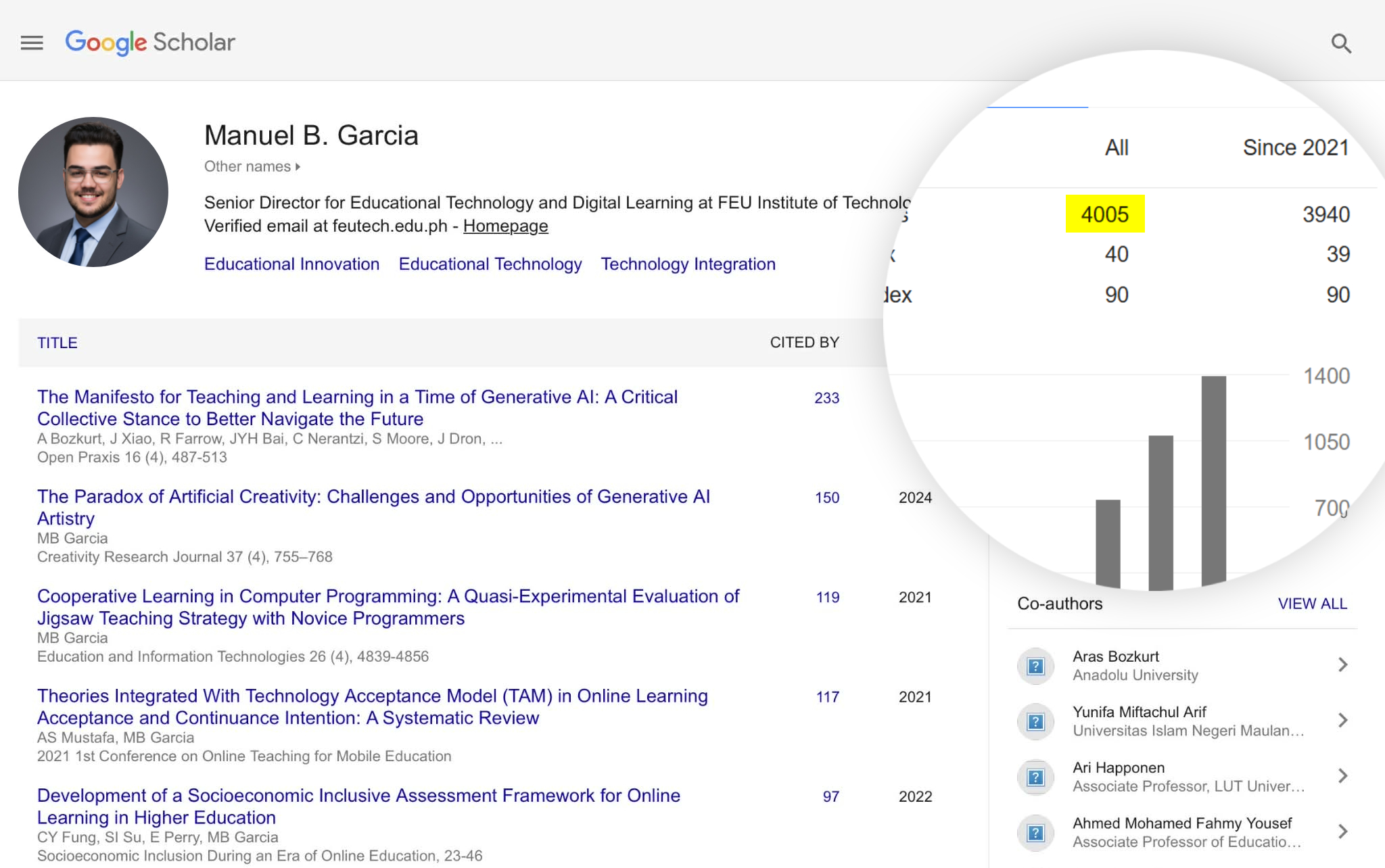
Surpassing 4,000 citations on Google Scholar marks a journey of perseverance, reflecting the impact and growth of my research over the years.
Surpassing 4,000 citations on Google Scholar feels a bit like watching a snowball roll downhill. At first, you push it slowly and wonder if it will even move. Then suddenly it starts gathering speed, and before you know it, it becomes much bigger than you ever expected.
Seven months ago, I shared that I had reached 3,000 citations. At the time, I joked that the jump from 2,000 to 3,000 felt surprisingly fast. Well, apparently the academic citation engine decided to shift into an even higher gear.
Today, that number has crossed 4,000.
If this trend continues, I might need to start refreshing Google Scholar with the same nervous energy people reserve for checking cryptocurrency prices. But jokes aside, this milestone is less about the number and more about what that number represents: a growing network of scholars engaging with the work.
The Acceleration Is Real
One thing that has become clear over time is that citations tend to follow a kind of research momentum curve.
- The first 1,000 citations took six years of publishing, experimenting, and learning how to navigate the research landscape.
- The second 1,000 arrived much faster and took only 10 months.
- The third 1,000 followed in 11 months, showing that the momentum was continuing to build.
- And now the jump from 3,000 to 4,000 happened in just 7 months.
It turns out research impact behaves a lot like compound interest. Once the foundation is there, growth can accelerate in ways that feel almost surprising.
The Power of Timely Topics and Collective Effort
Much of this momentum continues to come from research that sits at the intersection of education, technology, and emerging tools.
One example of this continued momentum is The Manifesto for Teaching and Learning in a Time of Generative AI. When I reached the 3,000 citation milestone, the paper had 73 citations. Fast forward to today and it has grown to more than 230 citations, making it my top paper overall. Watching that kind of growth in such a short time has been both surprising and encouraging. It is a reminder that when a global academic community comes together around an issue as transformative as generative AI, ideas can travel quickly and spark meaningful conversations across disciplines.
Another study that highlights the importance of timely research is The Paradox of Artificial Creativity. In less than two years, the paper has already accumulated around 150 citations. This is a strong signal that the conversation around AI and creativity is only getting started. The rapid uptake of this work shows how research that captures the right question at the right moment can resonate widely with scholars exploring similar emerging challenges.
In other words, some papers sprint while others run marathons.
Research Is Still a Team Sport
If there is one pattern behind this milestone, it is collaboration.
Research might look like a solitary activity from the outside. Just a person, a laptop, and too many browser tabs. In reality, it is much more collective. Co-authors, reviewers, editors, students, and readers all shape the trajectory of a paper.
Every citation is essentially a small message from somewhere in the world saying:
"Your idea connected with something I am working on."
And that is one of the most rewarding parts of academic work.
Open Invitation: Let's Work Together
If you have ever thought, "Hmm, I'd like to work on something fun, impactful, and maybe just a little unconventional," then consider this your official invitation. I am always looking for collaborators, whether you are across the hall, across the country, or across the globe.
Here is how collaboration has shaped my work so far:
- Solo Author - 37 papers (26.6%) | 1,191 citations | Avg: 32 citations/paper
- First Author – 45 papers (32.4%) | 1,141 citations | Avg: 25 citations/paper
- Co-Author – 23 papers (16.5%) | 733 citations | Avg: 32 citations/paper
- Last Author – 34 papers (24.5%) | 940 citations | Avg: 28 citations/paper
What is interesting is that the impact appears across different authorship roles. Some projects were written independently, some were led from the front, some were built through shared effort, and others were guided from a senior authorship position. In other words, there is no single formula for meaningful research.
If our interests align, I would be glad to explore the next project together.
Onward to the Next Chapter
For now, I am not obsessing over the next numerical milestone. The real goal is the same as it has always been:
- Ask interesting questions
- Work with great people
- Produce research that others find useful
If those things keep happening, the citation counter will take care of itself.
And to everyone who has been part of this journey, whether you have collaborated, cited the work, reviewed a paper, debated an idea, or simply read a few paragraphs before deciding it was not for you, thank you.
Here is to the next project, the next collaboration, and the next idea worth chasing.
